



B2B Saas
Internal Tool
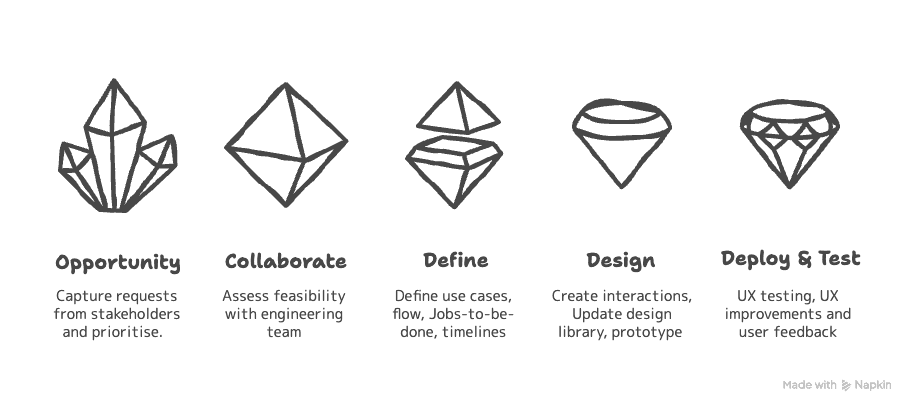
Agile Collaboration
Design Library
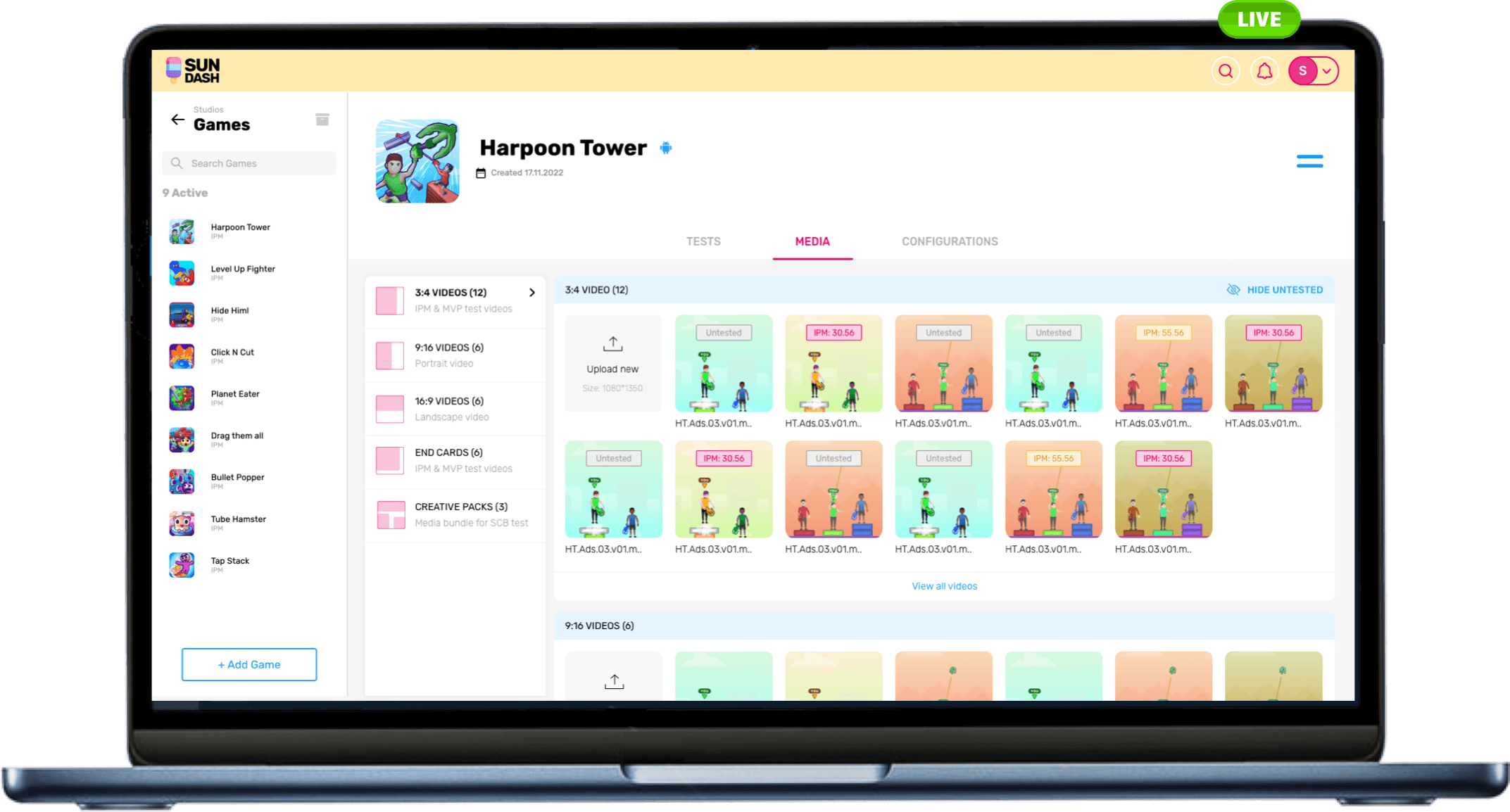
What was built
A platform to monitor and test the performance of Hybrid - Casual Games on Apple & Google Play Store. The platform combined data-driven insights with industry expertise to produce games. Their mission was simple: to scale fun, accessible games for millions of players worldwide.
🟢 LIVE
My Role
Product Designer (UX/UI)
As part of the product team at Sunday, I worked closely with the leadership & growth teams to shape product features for the internal tool - Sundash. My role involved identifying areas to improve product experience, and conceptualizing features and validating ideas through continious testing.
The Team @ Sunday
CEO
Growth Lead
Product Manager
Product Designer (UX/UI) (Me)
Lead Developer + 2 Full Stack Developers
QA Manager
Key Users

Partner Game Studios - Game Designers
Responsible for understanding how players behave after the game goes live and deciding what needs to change.
Behaviour
Game designers check analytics frequently after a new game release or update. They monitor dashboards to see how players interact with different levels, mechanics, and features. Their workflow often involves switching between analytics dashboards, testing tools, player feedback, and internal team discussions to decide what adjustments should be made to the game design.
Goals
• Understand how players behave inside the game
• Identify where players drop off or lose interest
• Improve retention and session length
• Validate design decisions through real player data
• Optimize game mechanics, level difficulty, and rewards
• Ship updates that improve player engagement
Pain Points
• Too many metrics but not enough actionable insights
• Hard to connect player behavior to specific game mechanics
• Data spread across multiple tools (analytics, A/B testing, store metrics)
• Difficult to quickly identify why players churn
• Requires manual comparisons between builds or experiments
Key KPI's
Player Behaviour
• Retention (Day 1, 7, 30)
• Session length
• Session frequency
Engagement
• Level completion rate
• Time spent per level
• Feature usage
Monetisation
• Conversion rate
• ARPU / ARPDAU
Experimentation
• A/B test performance
• Variant win rate
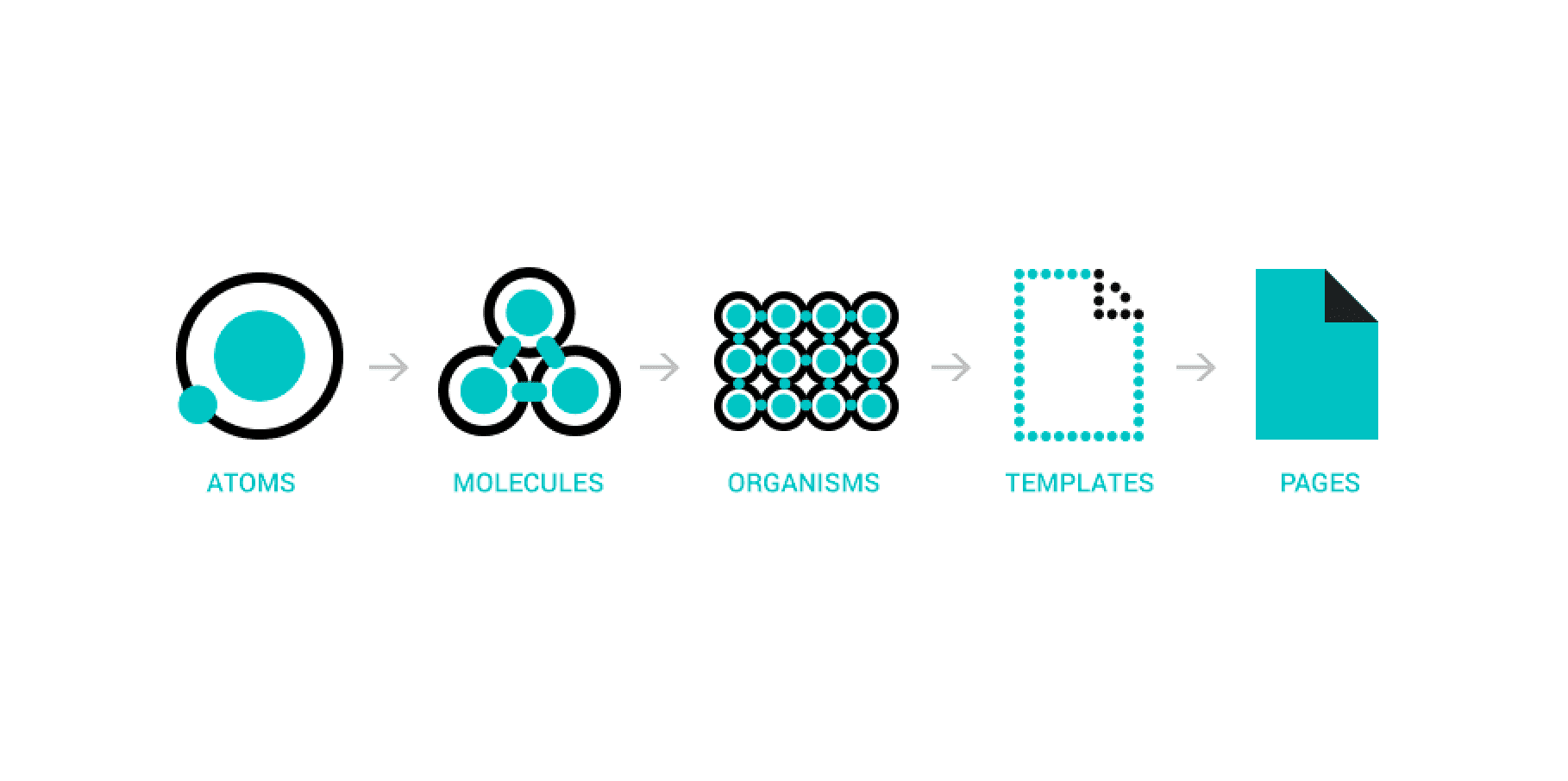
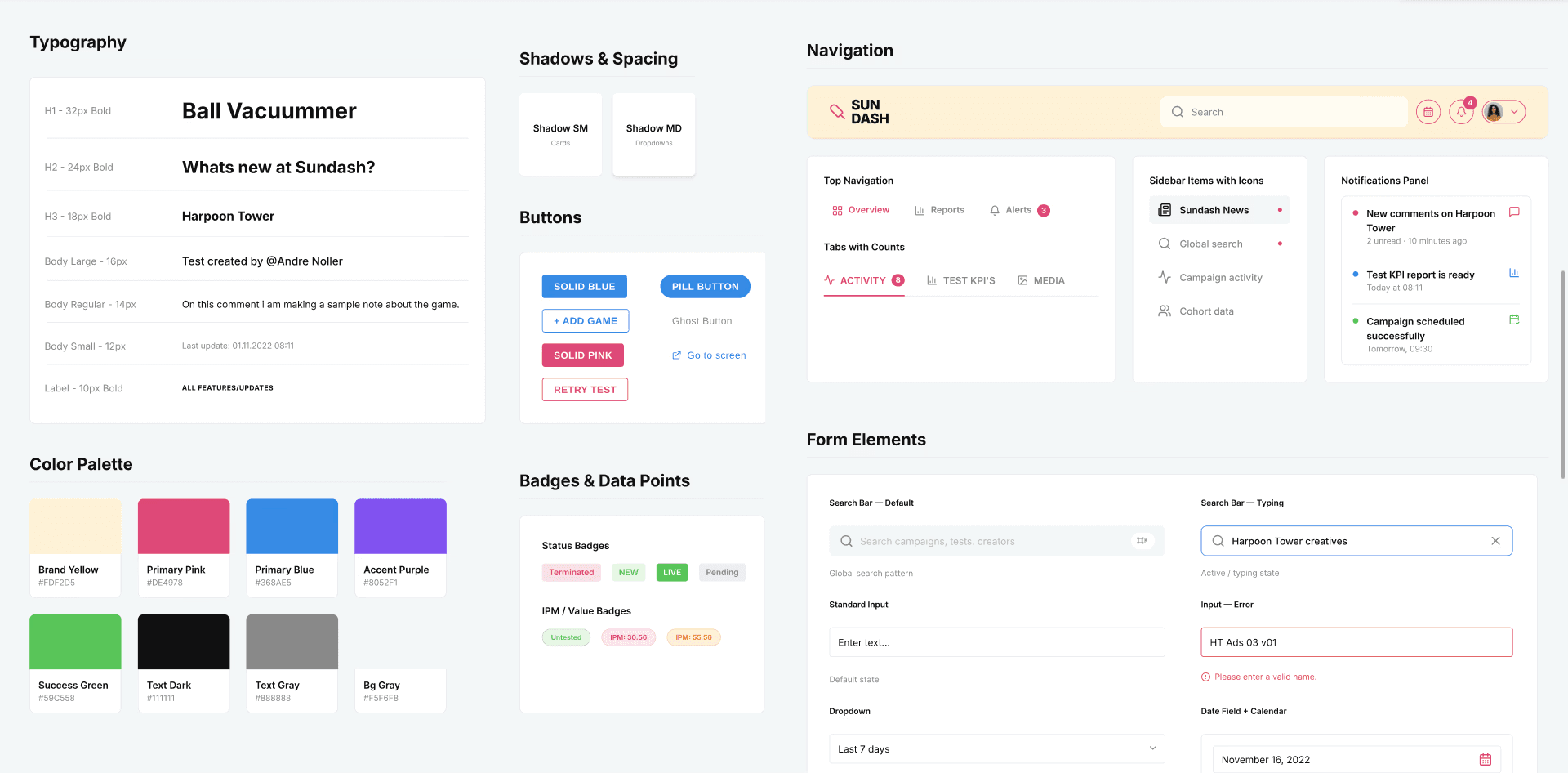
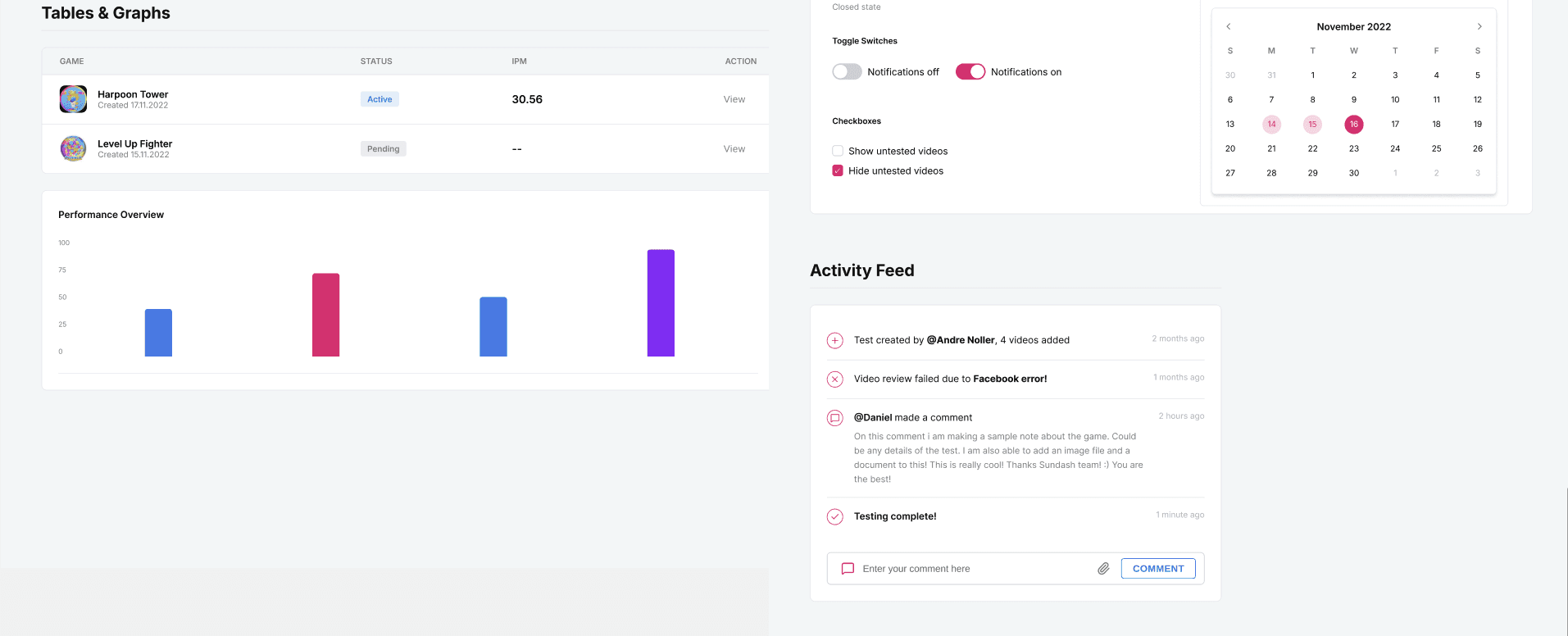
Design System
Global Search Feature
The Problem
Game designers often work across multiple games, and experiments. As the platform grew, navigating through nested menus to find a specific game, studio, or dataset became slow and frustrating. Designers needed a faster way to jump directly to what they were looking for without remembering where it lived in the navigation structure.
Solution
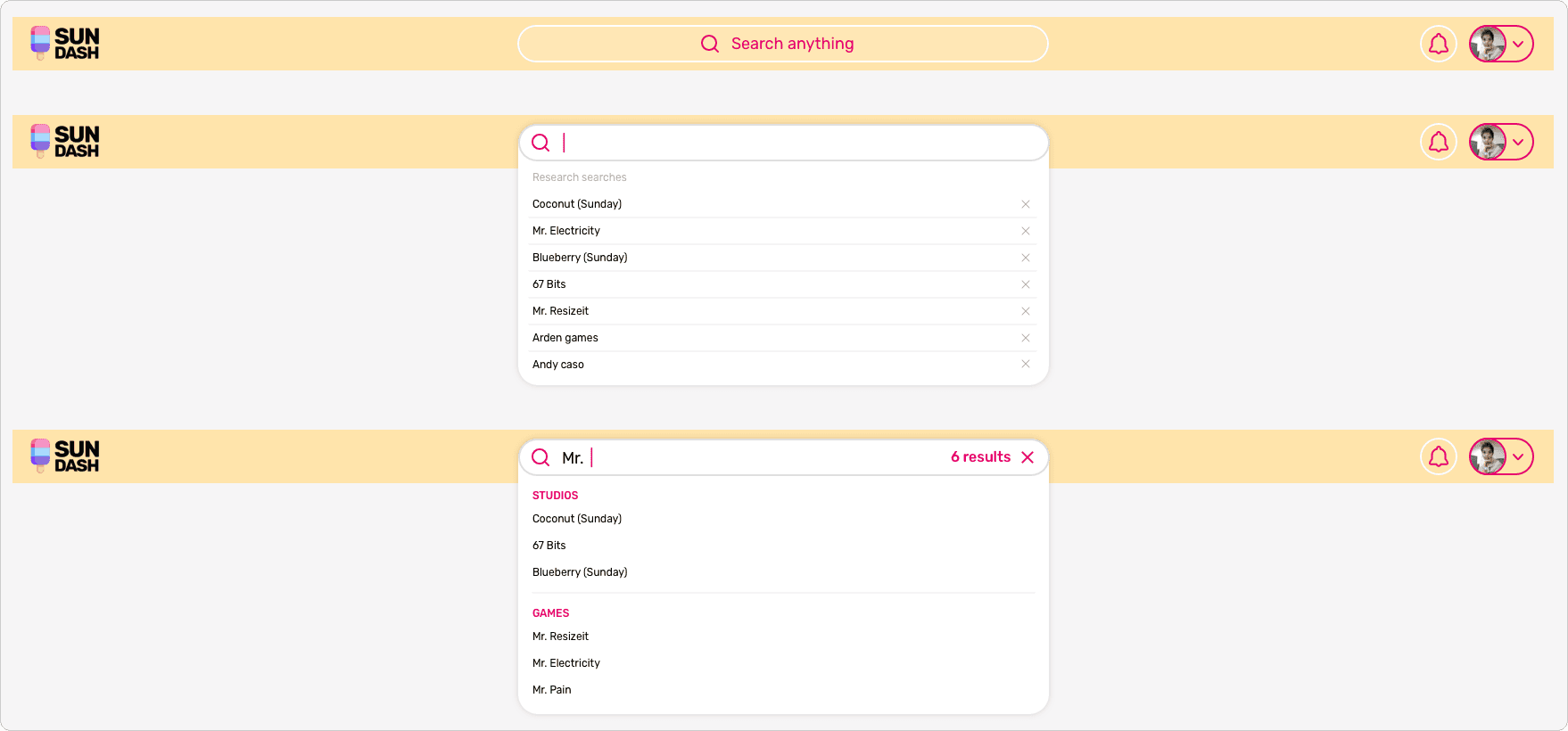
We introduced a global search that allowed users to quickly find studios, games, and other relevant entities from anywhere in the platform. As users typed, the system surfaced results dynamically, grouped by category to provide clarity between different result types.
Recent searches were also surfaced to support frequent workflows, allowing designers to quickly return to the projects they were actively monitoring.
Key Decisions
• Implemented platform-wide search instead of page-level search
• Grouped results by entity type (Studios, Games) for clarity
• Added recent searches for faster repeat access
• Enabled instant results while typing to reduce interaction steps
Design Impact
• Reduced average time to locate a game or studio by ~35%
• Increased successful navigation to target pages from search by ~60%
• Reduced reliance on menu navigation by ~40%
• 72% of designers adopted search as their primary navigation method during testing
Test Activity
The Problem
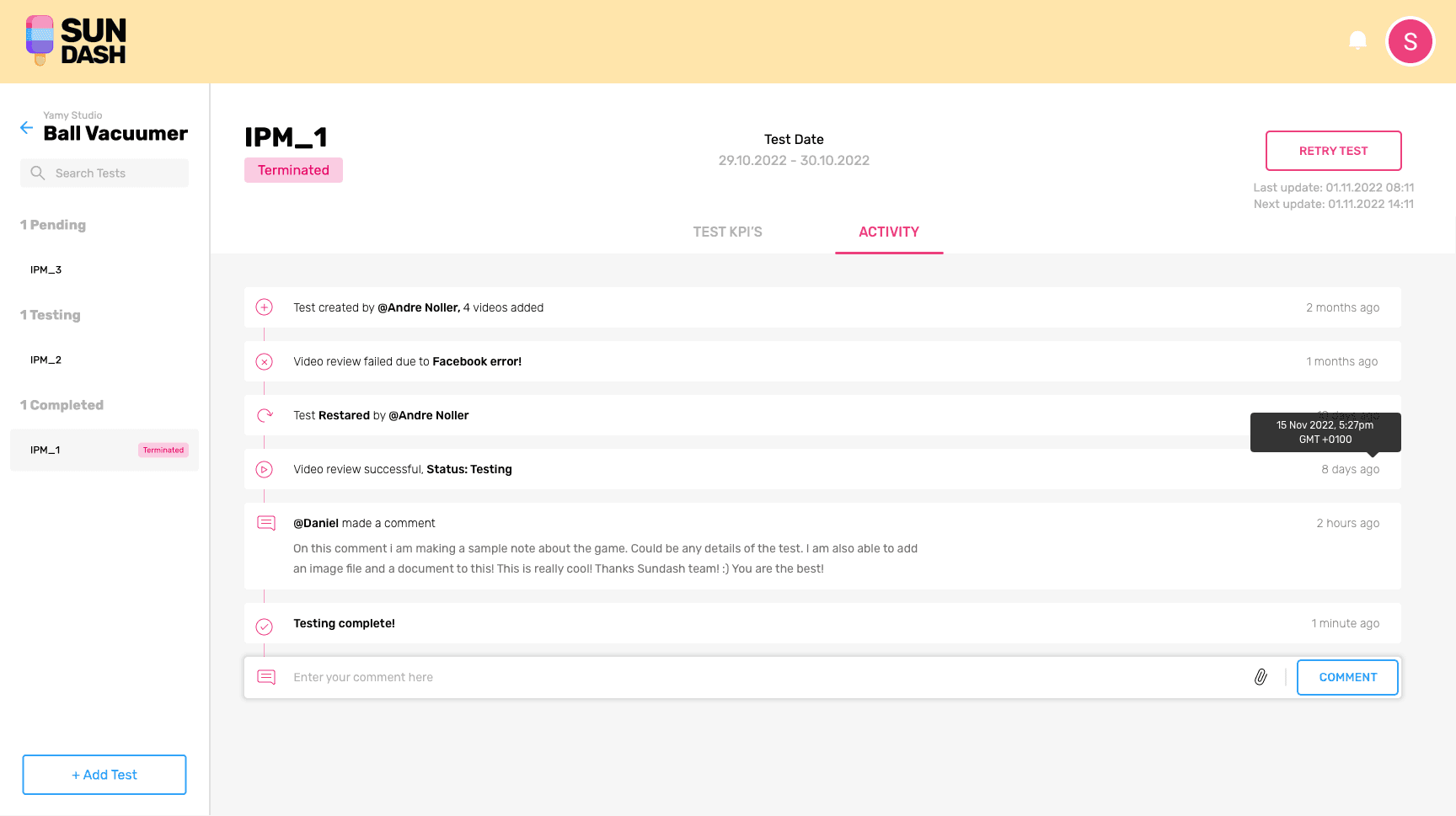
To view a record of what happened during the test.
The Solution
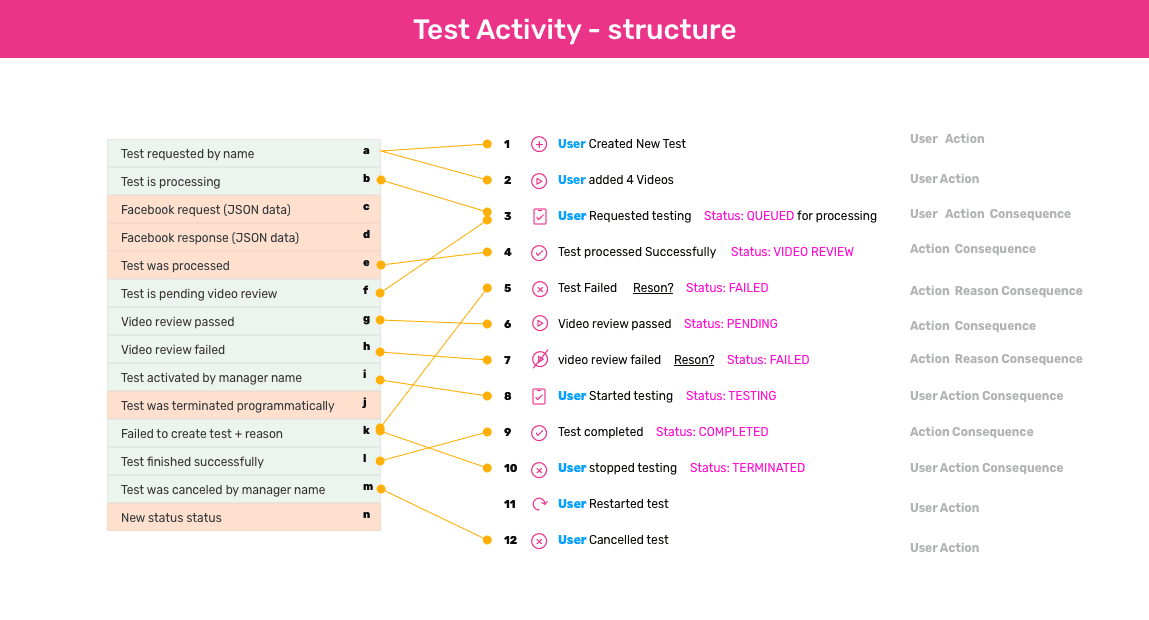
Test activity to show what user performed what action and what was the resulting consequence.
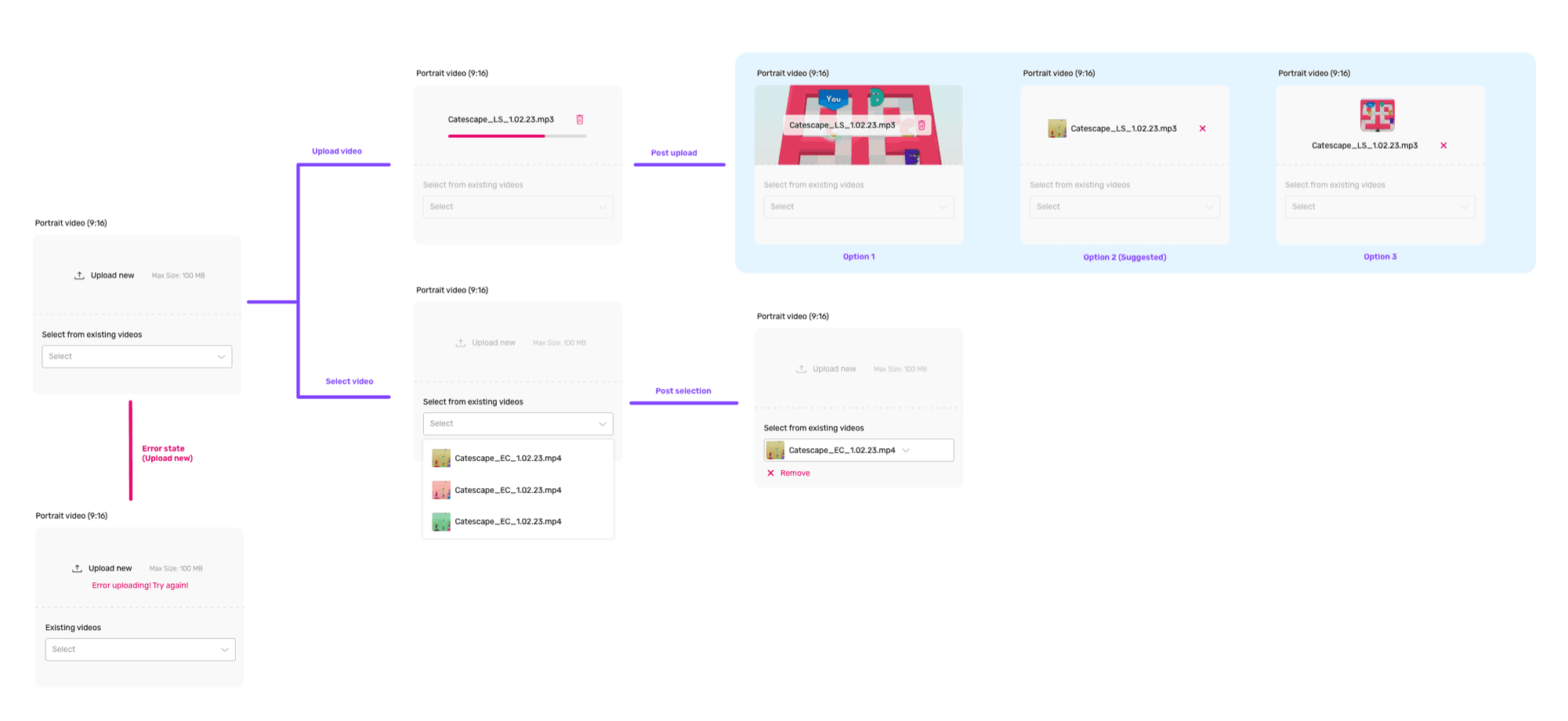
Feature Delivery
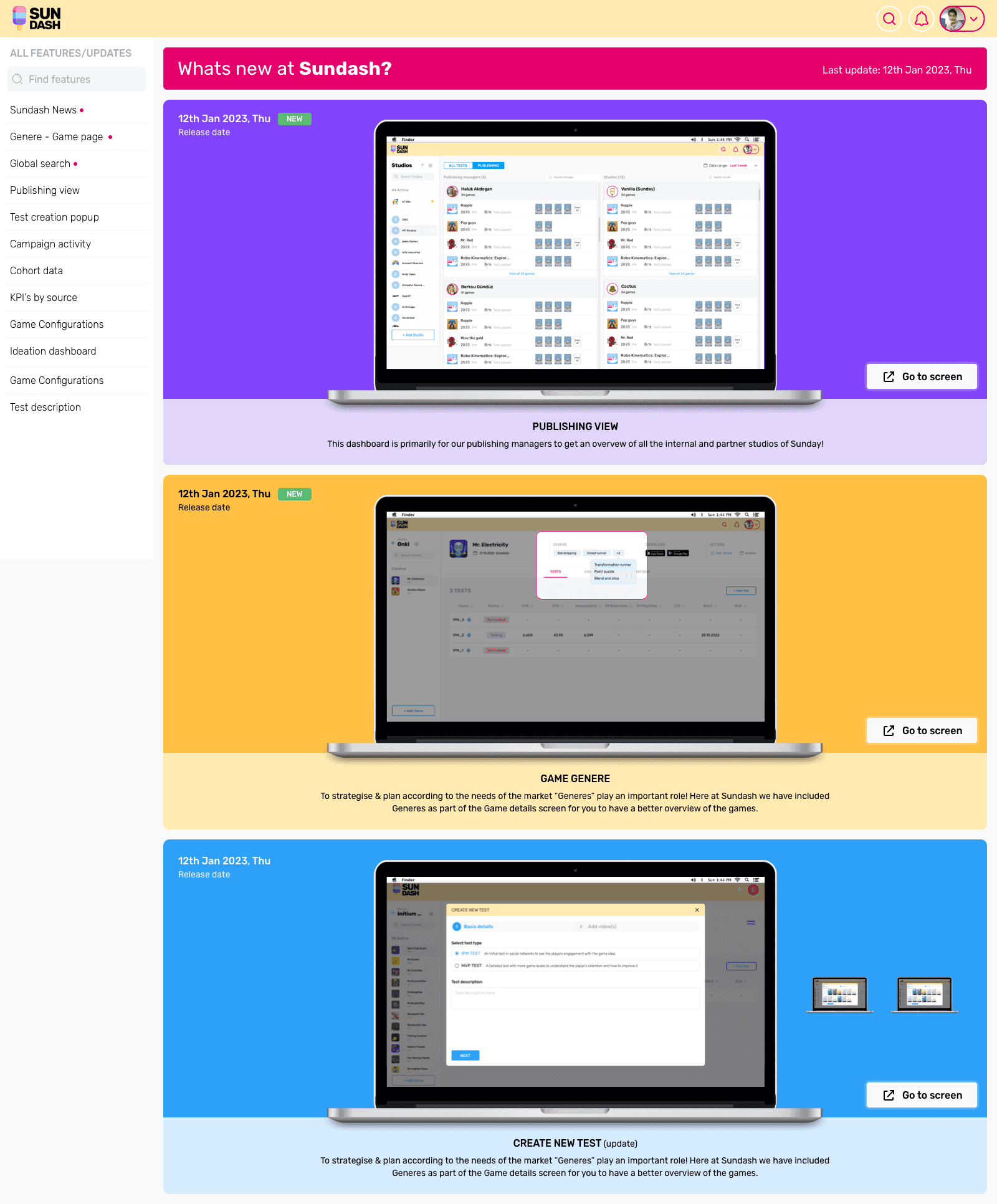
Post feature release they were presented to the users through the below updates page.
Contact to know more.
Due to the confidentiality clause, only 10-15% of the project is shown here. The rest could be displayed over a call.